
Editor’s Note (2026): Some cleat models mentioned below may no longer be widely available. This guide is intended to explain the features and design ideas behind lightweight football and soccer cleats so you know what to look for in newer models.
Buying Tips for choosing the lightest Football and Soccer Cleats
Lightweight football and soccer cleats are designed for speed, agility, and quick movement on the field.
For players who rely on acceleration, fast cuts, and explosive movement, lighter cleats can help improve comfort and responsiveness without feeling bulky.
But lightweight doesn’t always mean better.
The right cleat depends on your position, foot shape, support needs, and playing style.
Quick takeaway: Speed-focused players often prefer lightweight cleats, but players needing more stability or ankle support may benefit from slightly more structured options.
| If You Want… | Look For… |
|---|---|
| Maximum speed | Ultra-light soccer cleats |
| More ankle support | Mid or high football cleats |
| Better fit for wide feet | Leather uppers or wider models |
| Explosive cuts and agility | Low-profile traction systems |


Know Yourself: Why are lightweight cleats important to you? Are you looking to be quicker on the football field while being agile enough to protect a quarterback? Are you a soccer wing forward who wants to maximize their speed for more effective passing? Do lightweight cleats make your foot more comfortable and have a better feel for the field?
Know your sport: Gridiron Football, depending on the position, involve more movement than many people may think. According to an article on the Daily News Football players run a max of 1.25 miles per game. Not only should you think about the distance run but also the position played. If you are playing a defensive position, increased stability may be more of a priority for your football cleats. Soccer players run much longer and for farther distances. If you play a more offensive position such as a forward or striker, you want every advantage possible to increase your foot speed. This is also where lightweight cleats can come into play. The amount of distance you run and how you play your sport should be the strongest consideration for your next cleat purchase.
Know your needs: You have already determined that a pair of lightweight football cleats or soccer cleats are for you. In addition, Your personal foot anatomy should also be a strong consideration when making a lightweight cleat decision. For example, consider ankle support. If increased ankle support in your football cleats is desired, you may need to forego the lightest cleats for cleats that have the support that you need. Are your feet wide? Do you need more ankle support? Will your high arches require more cushion and support to prevent foot fatigue? For soccer cleats, do you need more midsole or heel cushioning?Only you as an individual can answer those questions and should be kept in mind while trying to find the best pair of lightweight cleats for you. Fortunately, there are many different types and styles of lightweight cleats that will fit the bill for whatever features you need to make your foot comfortable and increase your performance.
If you need more room in your cleats, check out my guide to the best soccer cleats for wide feet for fit-friendly options.
Lightweight Cleats – Interchangeability
Since we are discussing both football and soccer cleats, you may wonder if football cleats can be used to play soccer and vice versa. It is not suggested. The main differences between the 2 are that
Football cleats (Gridiron)
- Have toe cleats, which allow for improved traction during forward movements
- Are available in different heights for ankle protection
- Have stiffer midsoles for increased support and stability
- Constructed for stability
Soccer Cleats:
- Usually don’t have mid-soles, to keep feet closer to the field, reduce weight and to help with speed and agility
- Are low-rise only, which also help with the quick side to side movements required during the match
- Have uppers that are made from softer material to allow ball feel through the foot
Even though Football and soccer cleats may not be interchangeable, Lacrosse and Football cleats are. The main differences between Lacrosse cleats and football cleats are that Lacrosse cleats can mostly be found in mid-height models for increased ankle protection and have more cleats around the outside of the shoe to assist with speed and agility. Football cleats are available in a variety of heights and tend to have more cleats in the center or midsole of the shoe to increase stability.
Examples of Lightweight Football Cleats
While specific cleat models change over time, these examples show the type of lightweight features many football players look for when prioritizing speed and agility.
Nike Vapor Untouchable 2
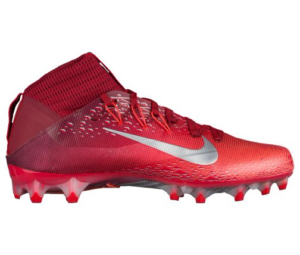
Best for: Speed-focused skill positions
At around 9.5 oz, the Nike Vapor Untouchable 2 was designed for explosive movement and quick cuts. Features like Flyweave construction and Flywire support helped create a lightweight feel while keeping the foot secure during aggressive lateral movement.
Why it stood out: Lightweight construction without sacrificing lockdown support.
Under Armour Spotlight

Best for: Players wanting an ultra-light feel
Weighing roughly 8.5 oz, the UA Spotlight focused heavily on speed and comfort. Its seamless upper and molded heel design helped create a close-to-foot fit that many athletes preferred for quick acceleration.
Why it stood out: One of the lighter football cleats while still offering solid structure.
adidas Adizero 5-Star 7.0
Best for: Fast players who want traction and comfort
The Adizero line has long focused on lightweight performance. Primeknit uppers and Sprintframe technology helped reduce bulk while improving traction and responsiveness.
Why it stood out: Lightweight feel with a more natural connection to the field.
Examples of Lightweight Soccer Cleats
Soccer players often prioritize lightweight cleats to improve acceleration, ball feel, and comfort during long matches. These examples highlight common features found in speed-focused soccer cleats.
Puma One Chrome
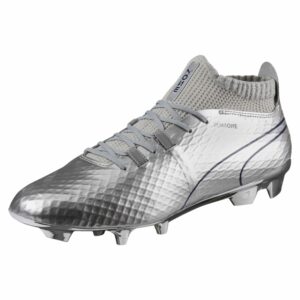
Best for: Players wanting comfort and ball control
The Puma One Chrome combined soft leather materials with lightweight construction. The evoKNIT sock design created a secure fit while maintaining flexibility for quick movement.
Why it stood out: A balance of comfort, touch, and lightweight performance.
Nike Magista OLA FG II
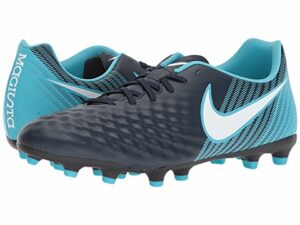
Best for: Offensive players prioritizing touch and agility
Weighing around 8 oz, the Magista OLA FG II emphasized ball feel and responsiveness. Its lightweight synthetic upper and EVA sockliner helped reduce weight while maintaining comfort.
Why it stood out: Lightweight build with strong comfort and control.
Mizuno Monarcida Neo 2 MIJ

Best for: Players wanting premium craftsmanship
The Monarcida Neo 2 stood out for its kangaroo leather upper and handcrafted feel. Lightweight but comfortable, it emphasized touch, fit, and durability.
Why it stood out: Premium leather feel without excessive bulk.
Note: Some of these cleat models may no longer be widely available, but the features highlighted here still reflect what to look for in modern lightweight football and soccer cleats.
Who Benefits Most From Lightweight Cleats?
- Soccer forwards and wingers: Players focused on acceleration and speed.
- Football skill positions: Receivers, defensive backs, and players who rely on quick movement.
- Athletes who dislike bulky cleats: Lightweight models often feel faster and less restrictive.
Players needing extra ankle support, stability, or wider fits may want to prioritize comfort and structure over pure weight savings.
Looking for Current Lightweight Cleats?
Since cleat models change frequently, newer versions are often available. Browse current lightweight football and soccer cleats to compare speed-focused designs, fit, and traction options.