
Best Grip Socks for Court Sports Stop slipping. Improve footwork. These are the best grip socks for table tennis, basketball, pickleball and more.
How Do Grip Socks Help in Court Sports?
Unlike regular athletic socks, grip socks use rubber or silicone-style grip elements to create additional friction between your foot, sock, and shoe.
That can be particularly useful in court sports because you’re frequently stopping, starting, pivoting, and moving laterally.
- Less movement inside the shoe: Grip elements can help keep your foot from sliding around during quick movements.
- More secure feel: Less internal movement can make the shoe feel more connected to your foot.
- Better stability during cuts: This can be particularly noticeable during lateral movements and sudden stops.
- Potentially fewer friction hot spots: Reducing movement inside the shoe may also help some players who experience rubbing or blisters.
Grip socks aren’t a substitute for properly fitting court shoes. Think of them as an additional layer of grip inside a shoe that already fits correctly.
Which Sports Benefit Most From Grip Socks?
Grip socks are especially useful in sports that involve fast stops, lateral movement, and quick direction changes.
- Table tennis: Better stability during explosive side-to-side movement. If you play table tennis regularly, I also put together a complete Table Tennis Gear Guide covering shoes, paddles, grip socks, and beginner buying advice.
- Basketball: Helps reduce foot movement inside the shoe during cuts and jumps.
- Pickleball & tennis: Improves court feel and stability during quick pivots.
- Volleyball: Helpful for sudden stops, lateral movement, and jumping control.
- Indoor soccer / futsal: Often used for traction and blister prevention.
Grip socks work best when paired with well-fitting court shoes. If your shoe already fits loosely, grip socks can help reduce movement — but they won’t completely fix poor fit.
Advantages & Disadvantages
What Are the Pros and Cons of Grip Socks?
| Pros | Cons |
|---|---|
| Helps reduce foot movement inside shoes Adds grip during quick stops and cuts May reduce rubbing and hot spots Can make court shoes feel more secure | More expensive than standard athletic socks Some models feel thick in snug shoes Grip requires careful washing and care Grip elements can wear down over time |
Best Grip Socks for Court Sports
 Trusox Mid-Calf Cushion
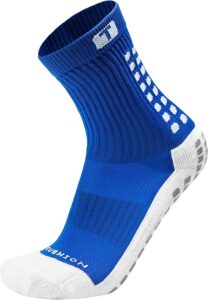
Best for: Serious athletes who want a more locked-in feel
Trusox Mid-Calf Cushion uses grip elements designed to reduce movement between your foot, sock, and shoe. The cushioned construction makes it a good option for athletes who prefer a more substantial sock rather than an ultra-thin feel.
Why consider it: Strong grip-focused design with additional cushioning.
Potential drawback: The thicker construction may feel too snug if your court shoes already have a close fit.
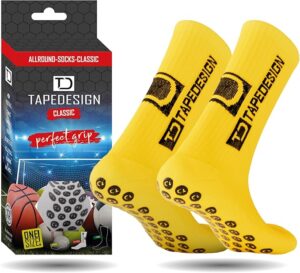
Tapedesign Grip Socks
Best for: Players who prefer a lightweight grip sock
Tapedesign is a good option for athletes who want additional grip without a heavily cushioned sock. Its lightweight construction makes it particularly appealing for fast-moving court sports where you still want a close connection with the shoe.
Why consider it: Lightweight feel with grip coverage underfoot.
Potential drawback: Less cushioning than some of the more substantial options.
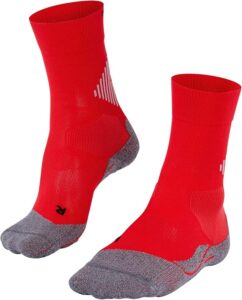
Falke 4 Grip Stabilizing Socks
Best for: Court athletes who want grip plus a supportive fit
FALKE’s 4GRIP Stabilizing socks use silicone nubs on both the inside and outside of the sock, along with compression zones and a left/right-specific fit. FALKE specifically lists racket sports, basketball, volleyball, soccer, and field hockey among the activities suited to the design.
Why consider it: Combines internal and external grip with compression and light cushioning.
Potential drawback: The stronger compression and more structured fit may feel too snug for players who prefer a relaxed sock.
UK-based favorite among footballers and indoor athletes. Non-slip soles with breathable knit and cushioned arch panels.
- Pros: Affordable, reliable traction, multiple colors
- Cons: Grip pattern wears faster with heavy use
Grip Socks for Court Sports: Quick Comparison
| Grip Sock | Best For | Cushioning | Fit / Compression | Price |
|---|---|---|---|---|
| Trusox Mid-Calf Cushion | Serious court & field athletes | Higher | Secure | $$$ |
| Tapedesign Grip Socks | Lightweight court use | Lower | Lightweight | $$ |
| FALKE 4GRIP Stabilizing | Grip + supportive fit | Light | Strong compression | $$$ |
| Gain the Edge 3.0 | Value-conscious athletes | Moderate | Snug | $ |
Do You Actually Need Grip Socks?
Not every court-sport athlete needs grip socks. If your shoes already fit securely and you rarely notice your feet moving inside them, a good pair of regular athletic socks may be perfectly adequate.
Grip socks become more useful if you notice your foot sliding inside your shoe during hard stops, lateral movements, or quick changes of direction. They can also be worth trying if you prefer a more locked-in feeling without tightening your laces excessively.
However, grip socks shouldn’t be used to compensate for shoes that are too large or too wide. Proper shoe fit should always come first. Think of grip socks as an extra layer of traction inside an already well-fitting court shoe—not a fix for poor fit.
Final Thoughts
Grip socks aren’t essential equipment, but they can be useful for court-sport athletes who notice their feet moving inside their shoes during quick stops and lateral movements.
The most important thing is still getting the shoe fit right. Once you’ve done that, grip socks can provide an additional layer of traction between your foot and shoe.
For sports like table tennis, tennis, racquetball, basketball, volleyball, and pickleball—where quick changes of direction are part of the game—they’re a relatively simple piece of equipment worth considering.
Frequently Asked Questions About Grip Socks
Do grip socks actually work?
Grip socks can help reduce movement between your foot and shoe by adding friction through rubber or silicone grip elements. They are most noticeable during activities involving quick stops, cuts, and changes of direction. They won’t fix a poorly fitting shoe, however.
Are grip socks good for tennis?
Grip socks can be useful for tennis players who notice their feet sliding inside their shoes during lateral movement, quick stops, or changes of direction. Properly fitting tennis shoes should still be the first priority.
Are grip socks good for pickleball?
Yes, grip socks can be useful for pickleball because the sport involves frequent lateral movement, short sprints, and sudden stops. They may help create a more secure connection between your foot and shoe during those movements.
Should grip socks feel tight?
Grip socks should fit securely without restricting your toes or causing uncomfortable pressure. Keep in mind that thicker or highly compressed grip socks can also change how a snug-fitting court shoe feels.
Can grip socks prevent blisters?
Grip socks may help reduce some of the movement and friction inside a shoe that can contribute to hot spots and blisters. However, shoe fit, moisture, sock material, and individual foot shape also play important roles.
Related Court Sport Guides
- Best Table Tennis Shoes – Shoes built for quick reaction speed and indoor traction.
- Best Racquetball Shoes – Court shoes designed for explosive lateral movement.
- Gum Rubber vs EVA Soles – Why outsole materials matter for indoor traction.
- Best Tennis Shoes for Wide Feet – Helpful if court shoe comfort and fit are your biggest concern.