




Disclosure: This article may contain affiliate links. If you buy through one of these links, Sole of Athletes may earn a commission at no additional cost to you.
Best Breathable Tennis Shoes: Staying Cooler Without Sacrificing Support
The best breathable tennis shoes combine ventilated mesh with enough reinforcement for stops, starts and lateral movement. Based on my own use, the K-Swiss Hypercourt Express 2 is the strongest starting point for players who also need a wide fit. The Prince T22 felt similarly breathable to me, although it has a more traditional, substantial build.
Quick Verdict
Best SOA-tested option: K-Swiss Hypercourt Express 2
Why: Its mesh-and-synthetic upper balances ventilation, court support and a more accommodating fit.
Consider it if: You want a breathable tennis shoe that is also available in wide sizing.
Look elsewhere if: You prefer a snug, speed-oriented fit or want the lightest possible court shoe.
SOA reality check: I have worn both the Hypercourt Express 2 and Prince T22. I do not remember a meaningful difference in how breathable they felt during play.
Breathable Tennis Shoes at a Glance
| Tennis shoe | Best for | Upper approach | Fit note | SOA experience |
|---|---|---|---|---|
| K-Swiss Hypercourt Express 2 | Wide feet and everyday comfort | Breathable mesh with supportive synthetic reinforcement | Generous shape; wide versions available | Personally worn |
| Prince T22 | Traditional support and durability | Mesh combined with a more substantial supportive structure | Roomier, more traditional feel | Personally worn |
| Adidas Adizero Ubersonic 5 | Fast movement and a light upper | Lightweight mesh reinforced for lateral movement | Adidas currently advises sizing up | Research-based inclusion |
| ASICS Solution Speed FF 3 | Lightweight all-court speed | Engineered mesh and film upper | Standard-width, performance-oriented fit | Research-based inclusion |
| Nike Vapor 12 | Lightweight hard-court play | Reduced-weight engineered mesh with reinforced wear zones | Secure performance fit | Research-based inclusion |
| New Balance FuelCell 996v7 | A current speed shoe with width choices | Lightweight upper with targeted NDure protection | Designed for a snug performance hold; wide version available | Research-based inclusion |
Testing note: I personally wore the Hypercourt Express 2 and Prince T22. The remaining shoes are included because their current construction matches the qualities discussed in this guide. I have not personally tested their airflow or court performance.
My Experience: Hypercourt Express 2 vs. Prince T22
The most honest result from my own experience is not particularly dramatic: the K-Swiss Hypercourt Express 2 and Prince T22 felt about the same to me in terms of breathability.
Neither created such a strong cooling sensation that it clearly separated itself from the other. Neither stands out in my memory as unusually hot, either.
Where they differed more noticeably was in their overall design and fit.
K-Swiss Hypercourt Express 2: My Best Starting Point for Wide Feet
The Hypercourt Express 2 combines breathable mesh with synthetic reinforcement. That combination is important because tennis shoes cannot rely on thin running-shoe mesh alone. The upper still has to help hold the foot during side-to-side movement.
Fit was the bigger issue for me. My usual athletic-shoe size is approximately an 11.5 medium, but I needed a size 12 wide in the Hypercourt Express 2. The size 12 medium felt too narrow.
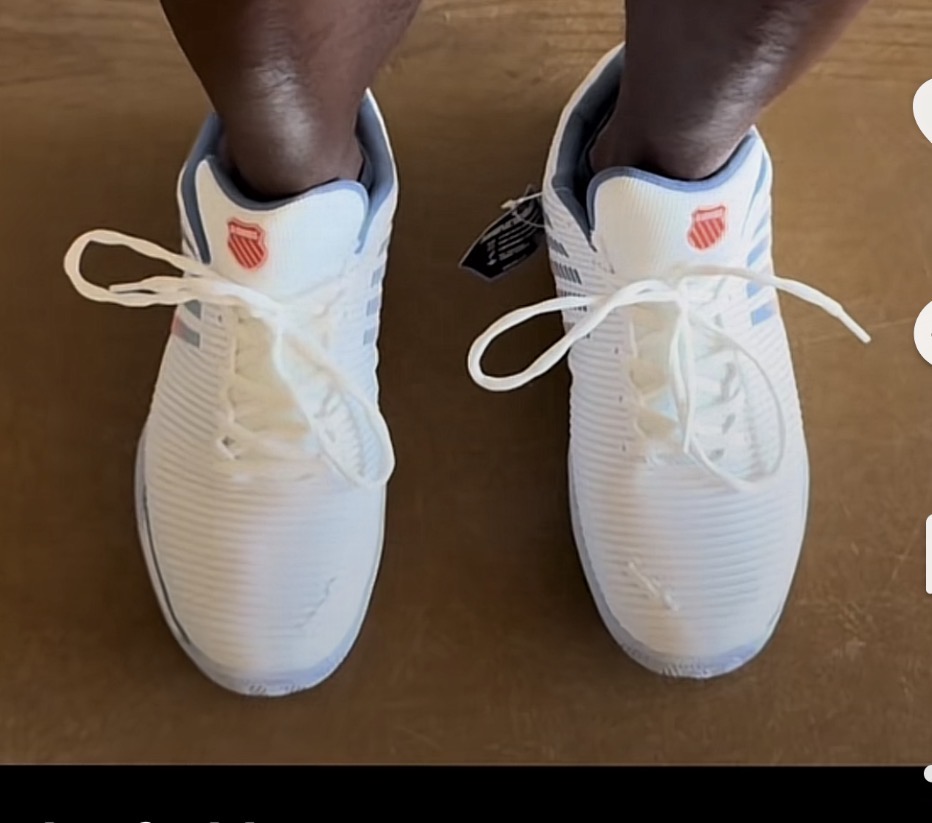
Fit & Sizing: Do not assume that the Hypercourt Express 2's generally accommodating reputation means the standard width will work for every wide foot. I still needed the dedicated wide version and went up half a size.
That firsthand sizing history is why it is my lead choice here. Breathability matters, but a ventilated upper will not feel comfortable if the shoe compresses your forefoot.
If forefoot room is as important to you as ventilation, see my guide to the best tennis shoes for wide feet for more fit comparisons.
Check current Hypercourt Express 2 pricing and wide-width availability
Prince T22: Ventilated, but More Substantial
The Prince T22 uses mesh to improve ventilation while retaining the durable, supportive character for which the T-series became known.
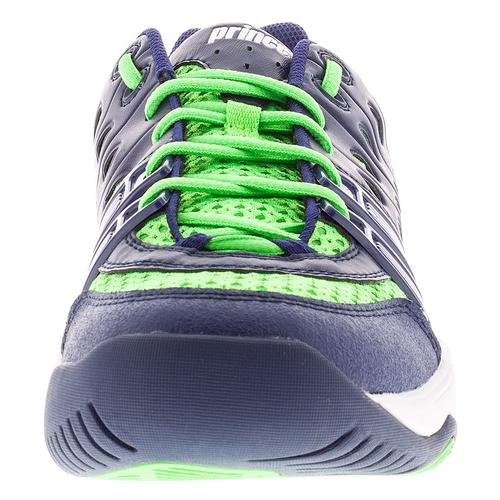
I found the T22 satisfactory, and I remember its breathability as roughly comparable with the Hypercourt Express 2. Its more traditional and substantial construction may appeal to players who value support and durability over the sensation of wearing the lightest possible shoe.
The T22 has been available for many years, so colorways and size availability can vary. That longevity also means shoppers should check whether they are looking at the original T22, T22 Lite or T22.5 rather than assuming the names are interchangeable.
Check current Prince T22 pricing and availability
Other Breathable Tennis Shoes Worth Considering
The following models have upper constructions that make them relevant to this guide. These are researched options, not shoes I am claiming to have personally tested.
Adidas Adizero Ubersonic 5
The Ubersonic 5 uses a lightweight mesh upper reinforced for lateral movement. That description captures the main challenge of a breathable tennis shoe: allowing airflow while still controlling the foot during cuts and changes of direction.
This is a speed-oriented option rather than my default recommendation for wide feet. Adidas currently notes that the shoe runs small and recommends sizing up, making retailer return policies especially important.
View current price, colors and available sizes
ASICS Solution Speed FF 3
ASICS describes the Solution Speed FF 3 as a lightweight all-court shoe. Its upper combines engineered mesh with film, aiming to keep weight down without removing the structure required for tennis movement.
Players who want a quick, lower-bulk feel may find that construction appealing. It is listed in standard width, so players needing extra forefoot room should pay close attention to fit.
View current price, colors and available sizes
Nike Vapor 12
Nike reduced the weight of the Vapor 12's engineered-mesh upper while maintaining added durability in high-wear areas around the toe and medial forefoot.
That targeted approach makes more sense for tennis than making the entire upper uniformly thin. The shoe still needs protection where sliding and dragging can quickly damage exposed mesh.
View current price, colors and available sizes
New Balance FuelCell 996v7
The FuelCell 996v7 replaced the 996v6 in New Balance's current line. Its lightweight upper uses targeted NDure drag protection to balance durability, flexibility and breathability.
New Balance describes it as a snug performance fit, but wide sizing is available. That combination makes it worth investigating if you want a speed-oriented shoe but cannot comfortably wear many standard-width models.
If you are comparing it with the previous generation, my New Balance 996v6 review explains the fit and performance character of that earlier model.
View current price, colors and available sizes
How to Choose a Breathable Tennis Shoe
Mesh is the obvious answer, but the full picture is more complicated.
Open or engineered mesh:
Mesh creates pathways for heat and moisture to escape. Engineered mesh can vary the density of the weave, opening airflow zones while making other areas more supportive.
Reinforcement placement:
Tennis shoes often add synthetic film, rubber or protective overlays around the toe, inside forefoot and lateral sides. These layers can reduce airflow, but they help the upper withstand dragging and resist excessive movement.
Internal padding and lining:
A shoe can have visible mesh and still feel warm if it uses thick padding or a dense inner lining. Breathability depends on the entire upper, not just the material visible from the outside.
Fit and internal space:
A shoe that is too tight can feel hotter because the upper presses directly against the foot and sock. This is one reason width belongs in the breathability conversation. More mesh cannot compensate for the wrong fit.
Breathability vs. Support and Durability
The coolest-feeling athletic shoe is not automatically the best tennis shoe.
Running shoes can use broad sections of soft, open mesh because most running movement travels forward. Tennis adds repeated lateral cuts, abrupt stops, toe dragging and direction changes. A court shoe therefore needs more containment and abrasion protection.
Look for a sensible balance:
- Mesh in lower-wear areas to help release heat.
- Reinforcement around the toe and medial forefoot for dragging and sliding.
- A secure midfoot to limit unwanted movement inside the shoe.
- The correct width so ventilation is not undermined by compression.
- A court-specific outsole appropriate for the surface you play on.
If a shoe feels wonderfully airy but allows your foot to move over the edge of the platform, that is a poor trade for tennis.
How to Keep Your Feet More Comfortable in Hot Weather
The shoe is only one part of the setup.
- Choose moisture-managing athletic socks rather than heavy everyday cotton socks.
- Allow tennis shoes to dry fully between sessions.
- Remove the insoles after especially sweaty matches if the shoe manufacturer permits it.
- Rotate between two pairs if you play on consecutive days.
- Avoid sizing down merely to achieve a tighter performance fit.
If you regularly develop blisters, numbness, skin irritation or persistent foot pain, shoe ventilation may not be the only issue. Reassess the fit and consider speaking with an appropriate medical professional.
Final Verdict
The K-Swiss Hypercourt Express 2 is my best starting point for players who want a breathable tennis shoe and also need an accommodating fit. Its mesh upper is reinforced for court use, and it is available in wide sizing.
My own experience does not support claiming that it feels noticeably cooler than the Prince T22. They felt about the same to me during play. The Hypercourt earns the lead because its fit options and overall balance make it easier to recommend—not because I measured better airflow.
For players who prefer a lighter, speed-focused design, the Adidas Adizero Ubersonic 5, ASICS Solution Speed FF 3, Nike Vapor 12 and New Balance FuelCell 996v7 all use modern mesh-based uppers with strategically placed reinforcement. Those models are worth considering, but their fit may matter more than small theoretical differences in ventilation.
If breathability is only one part of your buying decision, my tennis shoes guide by player type compares options based on fit, comfort and playing style.
Frequently Asked Questions
What are the best breathable tennis shoes?
The K-Swiss Hypercourt Express 2 is a strong starting point because it combines breathable mesh, court-ready reinforcement and wide-size availability. Lighter options with mesh-based uppers include the Adidas Adizero Ubersonic 5, ASICS Solution Speed FF 3, Nike Vapor 12 and New Balance FuelCell 996v7.
Are mesh tennis shoes good for playing tennis?
Yes, provided the mesh is reinforced in areas that handle lateral force and abrasion. Very soft, minimally structured mesh may feel cool but may not provide enough containment or durability for court movement.
Are tennis shoes more breathable than running shoes?
Not necessarily. Running shoes often use larger areas of lightweight mesh. Tennis shoes usually require more overlays and reinforcement to support side-to-side movement and resist toe dragging, which can reduce airflow.
Do wide tennis shoes feel cooler?
A correctly fitted wide shoe may feel less restrictive if a standard-width shoe compresses your foot. Width does not automatically create more airflow, but proper space can improve overall comfort and prevent the upper from pressing tightly against the foot.
Was the Hypercourt Express 2 more breathable than the Prince T22?
Not in my experience. I wore both models and remember them feeling approximately the same in terms of breathability. Their more noticeable differences involved fit, shape and overall construction.
Should I wear running shoes for tennis because they are more breathable?
No. Running shoes are designed mainly for forward movement and may not provide the lateral support, court traction or abrasion resistance needed for tennis. Choose a court-specific shoe that balances airflow with stability and durability.