
Disclosure: This post may contain affiliate links. As an affiliate, we earn from qualifying purchases. This means that we may receive a small commission if you purchase through these links, at no additional cost to you.
Sneaker performance comes down to how several parts of the shoe work together. The upper controls fit and breathability, the midsole affects cushioning and responsiveness, and the outsole provides traction and durability. Materials, shoe geometry, stability features, and newer technologies such as high-rebound foams and carbon plates can further change how a shoe feels and performs.
Understanding these basics can make it much easier to compare athletic shoes and decide which features actually matter for the way you move.
What Are the Main Parts of an Athletic Shoe?
Most athletic shoes are built from several components that work together to influence fit, cushioning, traction, stability, and comfort. Understanding these basic parts makes it easier to understand why two shoes designed for the same sport can feel completely different.
Nike – What are the parts of a shoe?:
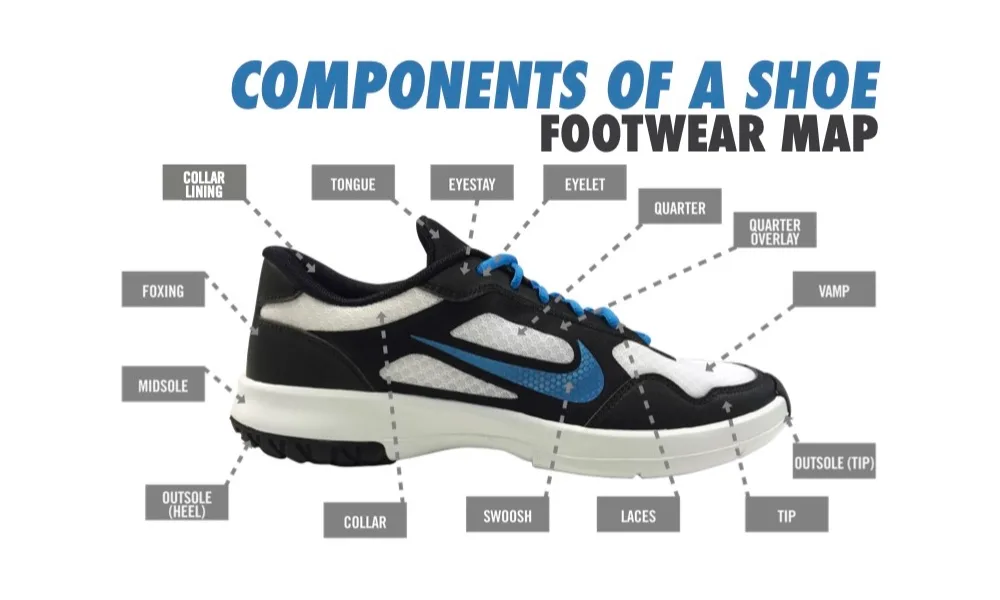
Upper
The upper surrounds your foot and helps determine how securely the shoe fits. Depending on the shoe, it may use engineered mesh, knit, leather, synthetic materials, or a combination of several materials.
The upper’s construction can affect breathability, flexibility, durability, and how securely your foot feels held during movement.
Midsole
The midsole sits between your foot and the outsole and is responsible for much of the shoe’s cushioning and underfoot feel.
Different foam formulations and midsole designs can make a shoe feel soft, firm, responsive, flexible, or highly cushioned. This is one of the areas where athletic shoe technology has changed significantly over time.
Outsole
The outsole is the portion of the shoe that contacts the ground. Its material and tread pattern are chosen based largely on how and where the shoe is intended to be used.
Road-running shoes, trail shoes, tennis shoes, indoor court shoes, and cleats all use different outsole designs because they have different traction and durability requirements.
Insole
The insole, sometimes called the sockliner, sits directly underneath your foot. It can provide an additional layer of cushioning and help manage the way the inside of the shoe feels against your foot.
Many athletic shoes use removable insoles, which can make them easier to clean or replace when worn.
Other Important Components
Depending on the type of athletic shoe, you may also find heel counters, toe guards, stability elements, plates, shanks, or other structural components. These features can change how flexible, supportive, protective, or responsive the shoe feels.
How Do Shoe Materials Affect Performance?
The materials used in an athletic shoe affect much more than appearance. They can influence weight, breathability, flexibility, durability, structure, and how the shoe fits around your foot.
Mesh and Knit Uppers
Mesh is commonly used in athletic shoes because it can provide ventilation while keeping weight relatively low. Different types of engineered mesh can also be designed with more structure in areas where the foot needs additional support.
Knit uppers can provide a softer, more flexible feel and may conform more closely to the foot. The tradeoff is that highly flexible uppers may not provide the same structured feel some athletes prefer during lateral movement.
Synthetic Materials
Synthetic overlays and reinforced materials are often added to areas that need more structure or durability. You may see them around the toe, sides of the shoe, eyelets, or heel.
How these materials are positioned can be just as important as the material itself. A court shoe, for example, may need reinforcement in areas exposed to repeated sliding and side-to-side movement.
Leather
Leather is less common in modern performance running shoes but is still used in some athletic and lifestyle footwear. It can provide structure and durability, although it is generally heavier and less breathable than lightweight mesh.
Why Material Choice Depends on the Activity
There isn’t one shoe material that’s best for every sport. A lightweight running shoe may prioritize ventilation and low weight, while a tennis or court shoe may sacrifice some flexibility to provide more structure and durability.
If you want a deeper look at how mesh, foam, rubber, leather, and other materials are used in footwear, see my Athletic Shoe Materials Explained guide.
How Does Cushioning Technology Change the Feel of a Shoe?
Cushioning is one of the biggest factors in how an athletic shoe feels underfoot, but more cushioning doesn’t automatically mean a better shoe. The type of foam, amount of cushioning, shoe geometry, and intended activity all affect how the midsole performs.
EVA-Based Foams
EVA has long been one of the most common materials used in athletic shoe midsoles. It is lightweight and can be formulated to provide different levels of softness, firmness, and flexibility.
Modern shoe companies often modify or blend their foams to create a particular ride. That’s why two shoes that both use EVA-based cushioning can feel very different underfoot.
TPU and Other High-Rebound Foams
TPU-based and other modern performance foams are designed to combine cushioning with greater responsiveness and energy return.
These materials are particularly important in modern running shoes, where manufacturers increasingly use specialized foams to balance low weight, cushioning, and responsiveness.
Gel and Mechanical Cushioning Systems
Not every shoe relies exclusively on foam. Some designs incorporate gel, air-filled units, or other cushioning elements alongside the midsole foam.
These systems can change how impact feels underfoot, but their usefulness depends on the complete shoe design rather than the presence of one particular technology.
Soft Cushioning vs Responsive Cushioning
A very soft shoe may feel comfortable when you first put it on, but softness and responsiveness aren’t the same thing.
Responsive cushioning is designed to compress under load and rebound as you move. Depending on the activity, some athletes may prefer a firmer and more stable platform while others prefer a softer, more cushioned ride.
The important question isn’t simply, “How much cushioning does this shoe have?” It’s whether the cushioning matches what you plan to do in it.
How Do Outsoles Affect Grip and Traction?
The outsole is where your shoe meets the ground, so its rubber compound, tread pattern, and overall design can have a major effect on traction. But the best outsole depends heavily on the surface and activity.
Rubber Compounds
Rubber is commonly used on athletic shoe outsoles because it can provide a useful combination of traction and durability. Manufacturers can change the rubber compound depending on whether a shoe is intended for pavement, indoor courts, trails, or other surfaces.
Some indoor court shoes use gum rubber because of its grip on clean indoor surfaces, while outdoor shoes may prioritize durability and resistance to abrasion.
Tread Patterns
The shape and direction of the outsole pattern also matter.
Tennis shoes, for example, need traction during lateral movement and quick stops. Trail-running shoes use deeper lugs to grip loose or uneven terrain. Road-running shoes generally use flatter outsole designs suited to relatively predictable surfaces.
This is why a shoe that grips well in one environment isn’t necessarily the best choice for another.
Traction Should Match the Surface
More aggressive traction isn’t automatically better. What matters is having an outsole designed for the movements you make and the surface you’re using.
For a deeper look at how outsole materials differ, see my Gum Rubber vs EVA Soles guide.
How Do Athletic Shoes Provide Stability and Support?
Stability in an athletic shoe comes from more than one feature. The width and shape of the platform, firmness of the midsole, upper construction, heel design, and other structural elements can all influence how secure and controlled a shoe feels during movement.
Different sports also require different types of support. A running shoe designed primarily for forward motion has different demands than a tennis or court shoe built for repeated lateral movement.
Heel Counters
The heel counter is the structured area surrounding the back of the heel. A firmer heel counter can help hold the rearfoot securely and reduce unwanted movement inside the shoe.
Some shoes use a more rigid heel structure, while others allow greater flexibility. Neither approach is automatically better—the right design depends on the intended activity and the fit you prefer.
Midsole and Platform Geometry
The shape of the midsole can have a major influence on stability. A wider platform generally creates a broader base under the foot, while sidewalls and strategically placed firmer materials can provide additional structure.
Modern stability shoes increasingly use geometry and differences in foam construction rather than relying solely on traditional medial posts.
Upper Structure and Fit
Support also comes from how securely the upper holds your foot.
Lacing systems, overlays, reinforced areas, and the shape of the upper can help keep the foot centered over the platform. This becomes particularly important during sports involving quick stops and lateral movement.
A supportive shoe should still fit your foot properly. Extra structure cannot compensate for a shoe that is too large, too narrow, or otherwise poorly matched to your foot.
Support Should Match the Activity
More support isn’t automatically better. A highly structured shoe may be useful for one athlete or activity but feel restrictive to someone who prefers greater flexibility and freedom of movement.
The goal is to find enough structure for the movements you’re performing without assuming that every athlete needs the same type or amount of support.
How Do Modern Running Shoes Improve Running Efficiency?
Modern performance running shoes combine several design elements to influence how the shoe behaves during each stride. Rather than relying on one feature, manufacturers balance weight, cushioning materials, stiffness, and shoe geometry to create different types of rides.
Lightweight Construction
Reducing unnecessary weight can make a performance shoe feel quicker and less cumbersome, particularly over longer distances. But manufacturers still have to balance low weight against cushioning, durability, structure, and comfort.
That is why the lightest shoe isn’t automatically the fastest or best choice for every runner.
High-Rebound Foams
Modern performance foams can provide substantial cushioning without the weight associated with some older midsole materials.
These foams compress under load and rebound as the runner moves through the stride. Different formulations produce different levels of softness, responsiveness, and energy return, which is one reason modern running shoes can feel dramatically different even when their stack heights look similar.
Rocker Geometry
Some running shoes use a curved or rocker-shaped sole designed to create a smoother transition from landing through toe-off.
How noticeable that rocker feels depends on the shoe’s geometry, stiffness, stack height, and the runner’s mechanics. Some runners enjoy a pronounced rolling sensation, while others prefer a more traditional and flexible ride.
Plates and Midsole Stiffness
Carbon-fiber and other plates can increase longitudinal stiffness and work together with the foam and geometry of the shoe. In modern racing shoes, the plate is only one part of a larger system rather than a standalone feature responsible for performance.
That distinction is important. A carbon plate doesn’t automatically make a shoe faster—the foam, geometry, weight, fit, and the individual runner all contribute to how the shoe performs.
For a deeper look at this technology, see my guide to carbon-plated running shoes.
How Does Biomechanics Affect the Way a Shoe Feels?
Two people can wear the same athletic shoe and have very different experiences with it. Body weight, foot shape, movement patterns, pace, flexibility, strength, and the activity itself can all influence how a shoe feels and performs.
That is one reason shoe specifications alone can’t tell you whether a particular model will work for you.
Heel-to-Toe Drop
Heel-to-toe drop is the difference in height between the heel and forefoot of a shoe.
A higher or lower drop can change how the shoe feels and may influence how forces are distributed as you move, but neither is automatically better. Some runners prefer a traditional higher-drop design, while others are comfortable in lower- or zero-drop shoes.
Changing dramatically from one type of shoe to another may also take some adjustment, particularly if your body is accustomed to a certain shoe geometry.
Foot Shape and Fit
The shape of your foot can be just as important as the technology inside the shoe.
Toe-box width, midfoot volume, heel shape, and overall width can determine whether a shoe feels secure or uncomfortable. A highly engineered shoe won’t perform well for you if the basic fit is wrong.
This is why firsthand fit observations are useful when comparing shoes—but your own foot shape still matters.
Movement and Intended Use
Different activities place different demands on footwear. Running primarily involves repeated forward movement, while sports such as tennis, basketball, and racquetball require more lateral movement, stopping, and changes of direction.
The way you move should therefore be part of the shoe-selection process rather than choosing footwear based only on cushioning, weight, or a particular technology.
There Is No Perfect Shoe for Everyone
Shoe technology can influence movement, comfort, and performance, but there isn’t one combination of cushioning, drop, stability, or geometry that works best for every athlete.
The better question is whether the shoe’s design works with your foot, your activity, and the way you prefer to move.
How Is Athletic Shoe Technology Evolving?
Athletic shoe innovation isn’t limited to adding electronics or flashy new features. Some of the biggest changes are happening in materials, manufacturing, foam technology, shoe geometry, and the way manufacturers tune different parts of a shoe for a specific activity.
Advanced Midsole Foams
Midsole development continues to be one of the biggest areas of athletic shoe innovation. Manufacturers are experimenting with lighter and more responsive foam formulations that can provide cushioning without making a shoe excessively heavy.
The result is a much wider range of underfoot experiences than simply choosing between a “soft” or “firm” shoe.
More Purpose-Built Shoe Geometry
Modern athletic shoes are increasingly designed as complete systems. Midsole shape, stack height, rocker geometry, outsole placement, plates, and upper construction can all be tuned around how a shoe is intended to move.
A racing shoe, trail shoe, tennis shoe, and gym shoe may therefore use very different engineering even when some of their individual materials are similar.
Improved Upper Construction
Engineered mesh, knit materials, targeted reinforcement, and increasingly precise manufacturing techniques allow shoe companies to vary structure across different parts of an upper.
That can help designers balance breathability and flexibility with a more secure fit in areas where additional structure is useful.
Technology Should Serve a Purpose
Newer technology isn’t automatically better. A shoe packed with advanced materials can still be the wrong choice if it doesn’t fit properly or isn’t designed for your activity.
The most useful innovations are the ones that improve the characteristics you actually need—whether that’s lower weight, better traction, more cushioning, greater durability, or a more secure fit.
How Is Sustainability Influencing Sneaker Design?
Athletic shoe design isn’t only focused on performance. Manufacturers are also experimenting with ways to reduce waste, use alternative materials, and rethink how shoes are manufactured and eventually disposed of.
Recycled and Alternative Materials
Some footwear now incorporates recycled polyester, rubber, foam scraps, or other recycled and alternative materials. Manufacturers are also exploring materials designed to reduce reliance on conventional virgin plastics and other resource-intensive components.
The challenge is balancing these choices with the durability, comfort, weight, and performance expected from athletic footwear.
Manufacturing and Waste Reduction
Sustainability also involves how a shoe is made. More efficient manufacturing processes, reducing material waste, and designing components with fewer unnecessary materials can all influence a shoe’s environmental footprint.
Durability matters too. A shoe that lasts longer before it needs to be replaced may reduce the frequency with which new footwear needs to be purchased.
What Happens When Shoes Wear Out?
Athletic shoes are difficult to recycle because they often combine foam, rubber, textiles, adhesives, and other materials into a single product. That makes end-of-life disposal an ongoing challenge for the footwear industry.
Some brands and recycling programs accept used footwear for reuse or material recovery, although options vary depending on the shoe and where you live.
Athletic shoes are difficult to recycle because they often combine foam, rubber, textiles, adhesives, and other materials into a single product. That makes end-of-life disposal an ongoing challenge for the footwear industry.
Some brands and recycling programs accept used footwear for reuse or material recovery, although available options depend on the type of shoe and where you live.
Sneaker Technology at a Glance
| Shoe Feature | What It Affects | Why It Matters |
|---|---|---|
| Upper | Fit, breathability, structure | Helps determine how securely and comfortably the shoe holds your foot |
| Midsole foam | Cushioning and responsiveness | Changes how soft, firm, cushioned, or responsive the shoe feels |
| Outsole | Traction and durability | Needs to match the surface and movements of the activity |
| Platform geometry | Stability and transitions | Can influence how stable the shoe feels and how you move through each step |
| Heel-to-toe drop | Underfoot geometry and feel | Different drops can change how a shoe feels and how forces are distributed during movement |
| Plates | Stiffness and ride characteristics | Work with the foam and shoe geometry rather than acting as a performance feature on their own |
| Fit | Comfort and security | Even advanced shoe technology is less useful if the shoe doesn’t fit your foot properly |
Frequently Asked Questions About Sneaker Technology
What technology is used in modern athletic shoes?
Modern athletic shoes can use engineered mesh uppers, specialized midsole foams, rubber outsole compounds, rocker geometry, stability elements, and plates or shanks. The exact combination depends on what the shoe is designed to do, whether that’s running, court sports, trail use, or training.
What part of a shoe provides cushioning?
Most of a shoe’s cushioning comes from the midsole, which sits between the foot and the outsole. Midsole materials and geometry affect how soft, firm, responsive, or cushioned a shoe feels underfoot.
Do carbon plates make running shoes faster?
A carbon plate is only one part of a performance running shoe. It works together with the midsole foam, shoe geometry, stiffness, weight, and the individual runner. Simply adding a carbon plate does not automatically make every shoe—or every runner—faster.
Does more cushioning make an athletic shoe better?
Not necessarily. More cushioning may be comfortable for some activities and athletes, but others may prefer a firmer, more stable, or lower-to-the-ground feel. The best amount of cushioning depends on the activity, your preferences, and how the complete shoe is designed.
How does an athletic shoe’s outsole affect performance?
The outsole affects traction and durability. Rubber compounds, tread patterns, and outsole geometry are designed around particular surfaces and movements. A trail shoe, road-running shoe, and tennis shoe therefore need very different types of traction.
What is the most important feature when choosing athletic shoes?
There isn’t one feature that’s most important for everyone. Fit, intended use, cushioning, traction, stability, and personal preference all matter. Advanced shoe technology is much less useful if the shoe doesn’t fit properly or isn’t designed for the activity you’re doing.
Final Thoughts
Sneaker technology has come a long way, but the most advanced shoe isn’t automatically the best one for you.
Materials, cushioning, traction, stability, geometry, and fit all work together to determine how an athletic shoe feels and performs. Understanding those pieces makes it easier to look past marketing terms and focus on the features that actually matter for your activity.
Whether you’re choosing shoes for running, court sports, training, or everyday use, start with fit and intended purpose. Technology should support what you need the shoe to do—not be the reason you buy it.
Related Sneaker Technology & Footwear Guides
Athletic Shoe Materials Explained – Learn how mesh, foam, rubber, leather, and other materials affect athletic footwear.
Gum Rubber vs EVA Soles – Understand how different outsole and sole materials affect traction, cushioning, and performance.
Speed Shoes: The Magic of Carbon-Plated Sneakers – Learn how carbon plates work with modern foams and shoe geometry in performance running shoes.
Sneakers Guide: How to Choose, Buy, and Wear the Right Pair – Use what you’ve learned about sneaker technology to choose footwear for your activity and needs.